
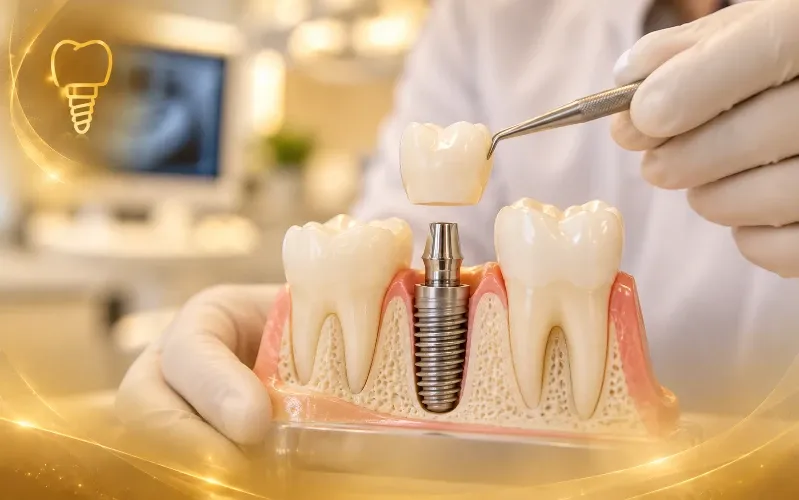
A dental implant is an artificial tooth root placed in the jaw bone to support a replacement tooth. It can be planned for a single tooth, several teeth or the entire jaw.
Who may be suitable?
- People missing one or more teeth
- Those who want a fixed solution instead of a removable denture
- Those with suitable jaw bone and gum health (assessed by examination and imaging)
How does the process work?
- Bone structure and general health are assessed with an examination and an X-ray or tomography scan.
- The implant is usually placed in the jaw bone under local anaesthesia.
- A healing period is allowed for the implant to integrate with the bone; this varies from person to person.
- After healing, the visible part (the replacement tooth) is prepared and fitted.
After treatment and care
Implants need regular cleaning like natural teeth. Good oral hygiene, regular check-ups and avoiding risk factors such as smoking contribute to long-term success. Stages and duration vary from person to person.
The information on this page is for general purposes only; an examination is required for diagnosis and treatment. Treatment plans are determined by the dentist according to each patient's condition.